The day you stopped renting intelligence
THE OPEN-WEIGHT REVOLUTION For years, using AI meant borrowing it through someone else’s API. Now models like GLM-5.2 can be downloaded, run on your own hardware, and owned outright. That changes who gets to build the future. FROM CLOSED APIS TO OPEN POSSIBILITIES · A PLAIN-ENGLISH GUIDE Artificial intelligence has quietly become part of everyday […]
Continue Reading
Agentic Graph RAG: Why It’s the Next Frontier for Enterprise AI
The enterprise AI landscape is littered with RAG systems that fail silently. Not the catastrophic, headline-grabbing failures the subtle ones. The answer that cites the right policy but the wrong effective date. The cross-domain question that gets a single-domain response. The hallucinated relationship between two very real entities. Retrieval Augmented Generation became the default enterprise AI […]
Continue Reading
LiveKit Egress Made Simple – Record & Stream
In short: LiveKit Egress is an export service that lets you record, stream, or archive any LiveKit room with a single API call – outputting to MP4, HLS, or RTMP (YouTube/Twitch) without custom FFmpeg pipelines. This guide covers how it works, the egress types available, and when to use each. Building real-time apps video calls, […]
Continue Reading
Building an Async Script Execution Engine Inside a Workflow System Using AWS Lambda
Published: May 7, 2026 | Last Updated: June 11, 2026 TL;DR: This post explains how we built an async script execution engine inside a B2B SaaS workflow system using AWS Lambda. In short, we solved the worker-blocking problem by invoking Lambda asynchronously, pausing the workflow via a custom error class, and resuming it through a […]
Continue Reading
Rails 8’s Solid Trifecta: Do You Still Need Redis?
For a long time, Redis has been a default part of any serious Ruby on Rails architecture. It has powered critical components such as background job processing, application caching, and real-time updates. In most production environments, Redis was not something teams actively evaluated; it was simply assumed to be part of the stack, forming an essential […]
Continue Reading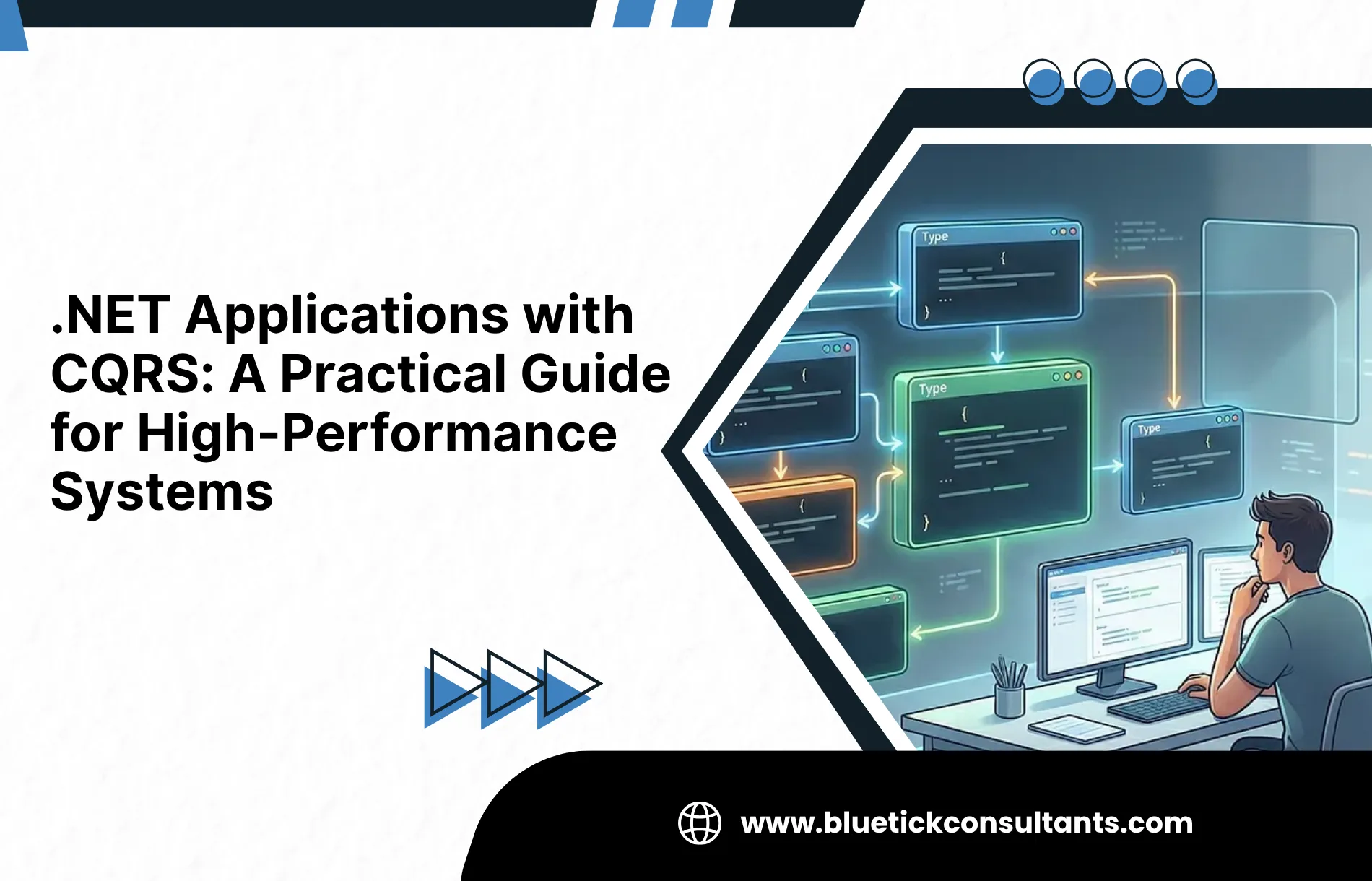
.NET Applications with CQRS: A Practical Guide for High-Performance Systems
Introduction Scaling a .NET application is rarely about adding more features. The real challenge begins when the system starts handling more users, more data, and more complex workflows. At that point, performance issues, tightly coupled logic, and unclear boundaries begin to slow development down. Many teams try to solve this by reorganizing code or introducing […]
Continue Reading