LiveKit Egress Made Simple – Record & Stream
In short: LiveKit Egress is an export service that lets you record, stream, or archive any LiveKit room with a single API call – outputting to MP4, HLS, or RTMP (YouTube/Twitch) without custom FFmpeg pipelines. This guide covers how it works, the egress types available, and when to use each. Building real-time apps video calls, […]
Continue Reading
Building an Async Script Execution Engine Inside a Workflow System Using AWS Lambda
Published: May 7, 2026 | Last Updated: June 11, 2026 TL;DR: This post explains how we built an async script execution engine inside a B2B SaaS workflow system using AWS Lambda. In short, we solved the worker-blocking problem by invoking Lambda asynchronously, pausing the workflow via a custom error class, and resuming it through a […]
Continue Reading
Rails 8’s Solid Trifecta: Do You Still Need Redis?
For a long time, Redis has been a default part of any serious Ruby on Rails architecture. It has powered critical components such as background job processing, application caching, and real-time updates. In most production environments, Redis was not something teams actively evaluated; it was simply assumed to be part of the stack, forming an essential […]
Continue Reading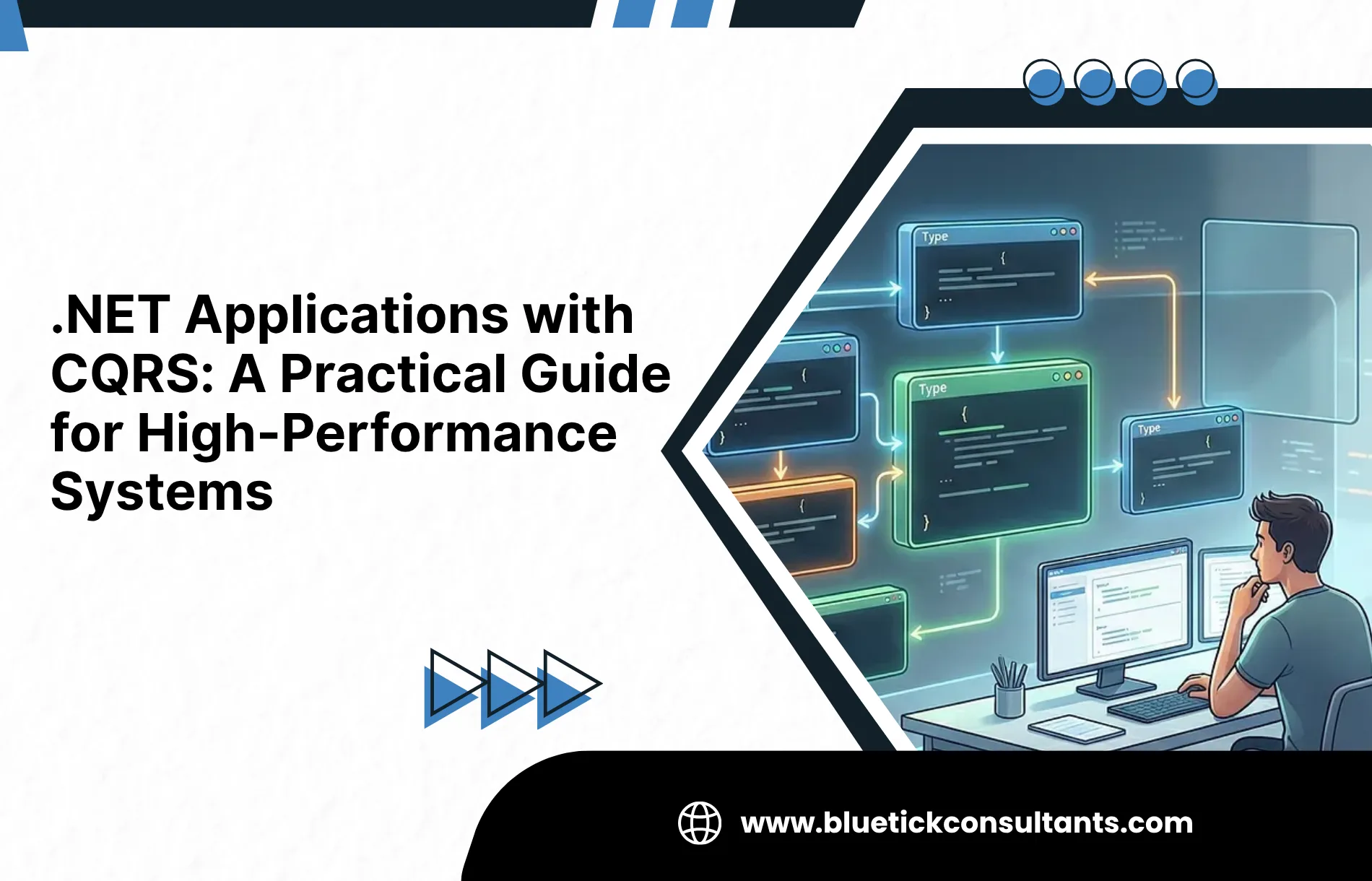
.NET Applications with CQRS: A Practical Guide for High-Performance Systems
Introduction Scaling a .NET application is rarely about adding more features. The real challenge begins when the system starts handling more users, more data, and more complex workflows. At that point, performance issues, tightly coupled logic, and unclear boundaries begin to slow development down. Many teams try to solve this by reorganizing code or introducing […]
Continue Reading
React Data Fetching Best Practices: Why TanStack Query is Essential for Scaling
When React applications start growing, data quickly becomes the real challenge. Every project begins simply with a few components, some API calls, and a couple of useEffect hooks and everything works smoothly at first. But as the application scales, new features begin sharing data, multiple components start fetching the same APIs, and loading and error […]
Continue Reading
A Practical Guide to Using Anthropic Knowledge Work Plugins in Enterprise Workflows
Generative AI adoption in enterprises has largely followed a familiar pattern so far: chat interfaces, prompt engineering, and ad-hoc copilots layered on top of existing tools. While useful, this approach often breaks down when teams try to operationalize AI across departments. Anthropic’s Knowledge Work Plugins, recently open-sourced, signal a meaningful shift in this trajectory. Instead […]
Continue Reading